European IFAKs
Russian Individual First Aid Kit / APPI - 7
2023
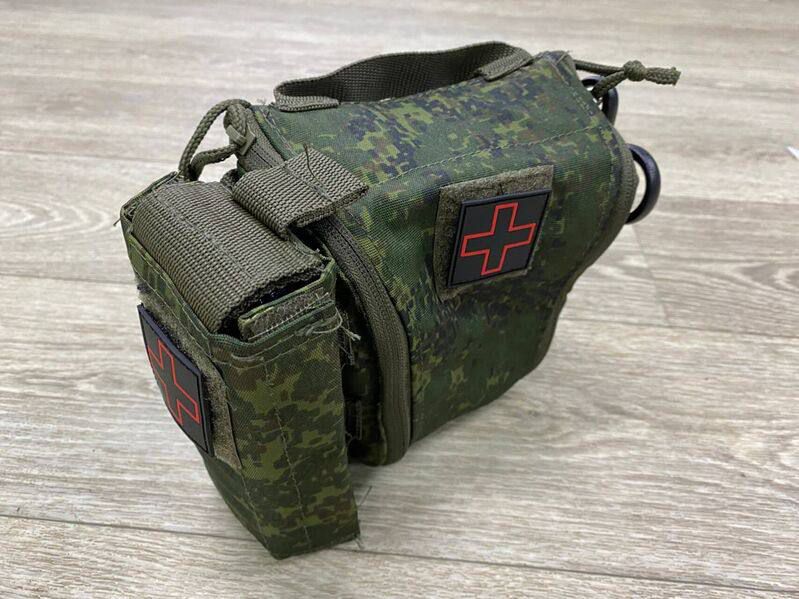
Image from Open Sorce
...
Description
The АППИ (Аптечка первой помощи индивидуальная), which translates directly to "Individual First Aid Kit," is the standard-issue tactical medical kit used by the Russian Armed Forces. Under the Russian Ministry of Defense guidelines and the Ratnik or Legioner modernization programs, its exact contents vary based on the specific version (referred to as "Вариант" / Variants 1 through 7).
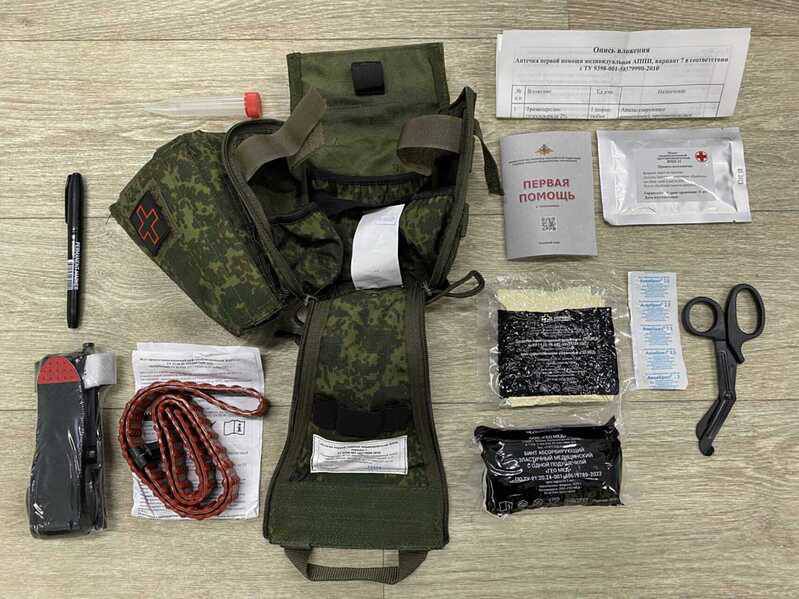
АППИ-7 (Аптечка первой помощи индивидуальная, вариант 7) is the upgraded standard-issue tactical first-aid kit used by the Russian Armed Forces. Produced under technical specifications ТУ 9398-001-58379990-2010 (primarily manufactured by the Moscow Endocrine Plant), it represents a modernization over the older 4-item Soviet/Ratnik-era kits to align more closely with contemporary tactical medicine practices.
APPI-7 (Individual First Aid Kit, Option 7) is the upgraded standard-issue tactical first-aid kit used by the Russian Armed Forces. Produced under technical specifications TU 9398-001-58379990-2010 (primarily manufactured by the Moscow Endocrine Plant), it represents a modernization over the older 4-item Soviet/Ratnik-era kits to align more closely with contemporary tactical medicine practices. Fire and Industrial Safety Portal +2
АППИ-7 (Аптечка первой помощи индивидуальная, вариант 7) is the upgraded standard-issue tactical first-aid kit used by the Russian Armed Forces. Produced under technical specifications ТУ 9398-001-58379990-2010 (primarily manufactured by the Moscow Endocrine Plant), it represents a modernization over the older 4-item Soviet/Ratnik-era kits to align more closely with contemporary tactical medicine practices.
Core Contents of the APPI-7
The standard layout of the 2023 updated variant is packed into a two-section MOLLE-compatible pouch and consists of the following components:
Hemorrhage Control:
1 × Windlass Tourniquet: A modern mechanical tourniquet with a metallic or durable windlass for massive limb bleeding.
1 × ZhKRS Silicone Tourniquet: A ribbed silicone elastic band tourniquet (alternative to the older rubber Esmarch design).
1 × Chitosan Hemostatic Gauze: A local hemostatic Z-fold dressing (such as "GEO MED") used for wound packing.
Wound Treatment & Dressing:
1 × Emergency Trauma Bandage: A sterile pressure dressing with an elastic bandage element (similar to an Israeli bandage).
Chemical & Environmental Protection:
1 × IPP-11 Packet: An individual anti-chemical decontamination wipe kit.
10 × Water Purification Tablets: Disinfection tablets (such as "Aquabreeze 2.5") for making wild water potable.
Tools & Equipment:
Tactical Shears: Blunt-tipped curved scissors designed to safely cut through thick military uniforms.
Syringe-Tube Protective Case: A dedicated rigid container meant to securely hold an issue analgesic/painkiller tube (medication itself is supplied per mission).
Permanent Marker: A black marker used to write the exact time of tourniquet application.
First Aid Leaflet: Instructional quick-reference card for battlefield trauma management.
History note Category
A new version of the APPI-7 personal first aid kit for military personnel
Protection in emergency situations
Hard to learn, easy to fight
Protection in emergency situations
Hard to learn, easy to fight
A tactical first aid kit is an indispensable item on the battlefield. Knowing how to use its contents can save the lives of both yourself and your comrades. This article describes a new version of the APPI-7 personal first aid kit for military personnel.
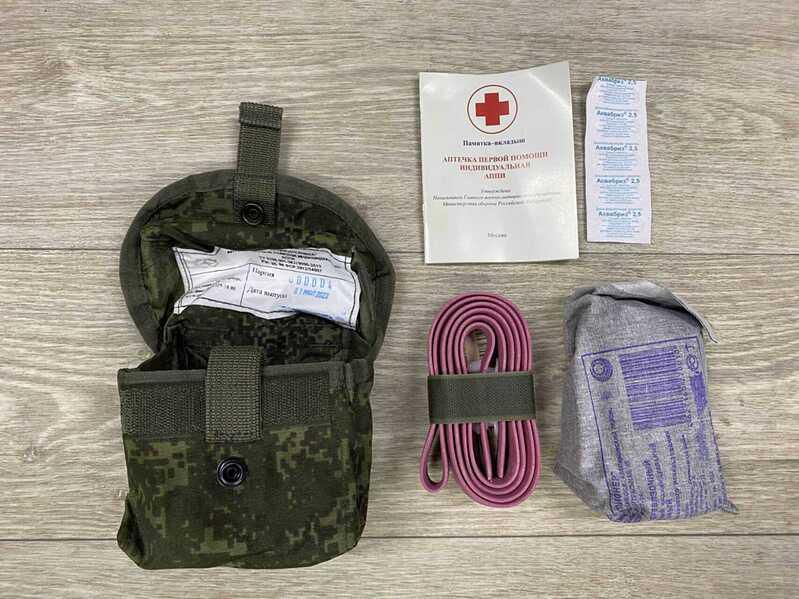
The standard first aid kit at the start of the special military operation (SVO) was the individual first aid kit (IFAK) from the "Ratnik" equipment set, adopted for supply by the Ministry of Defense order No. 744 of May 21, 2011. Its contents consisted of four items: an Esmarch hemostatic tourniquet, a dressing pack, a sterile hemostatic dressing, and a disinfectant (tablets).
Development Context
The АППИ (Аптечка первой помощи индивидуальная), which translates directly to "Individual First Aid Kit," is the standard-issue tactical medical kit used by the Russian Armed Forces. Under the Russian Ministry of Defense guidelines and the Ratnik or Legioner modernization programs, its exact contents vary based on the specific version (referred to as "Вариант" / Variants 1 through 7).
Item Details
The technical breakdown of what is found inside a standard official АППИ includes:
1. Hemorrhage Control & Bandages
Жгут кровоостанавливающий (Tourniquet): Usually an elastic rubber or silicone band tourniquet (such as the "Alpha" (Альфа) or "Appolo" (АППОЛО) models) rather than a mechanical windlass (CAT) style. Newer variants include up to two band-type and two tube-type tourniquets.
Пакет перевязочный индивидуальный (PPI / Field Dressing): A sterile individual dressing pack. Modern kits use the ППИ-Э, which is a localized equivalent to an Israeli compression bandage with an elastic wrap.
Гемостатическое средство (Hemostatic Agent): Localized clotting gauze or powder designed to plug severe wounds. Older kits contained Gemostop (Гемостоп—a zeolite powder), while newer ones utilize Gemoflex Combat (Гемофлекс комбат) or chitosan-based Z-folded gauze.
2. Medications & Chemical/Water Treatment
Шприц-тюбик с анальгетиком (Analgesic Syrette): A localized case containing a non-narcotic painkiller, most commonly Nefopam (Нефопам), though older variants technically provisioned synthetic opioids like Trimeperidine (Тримеперидин / Promedol).
Средство обеззараживания воды (Water Purification): Aquatabs or similar chlorine/iodine tablets to purify field water.
ИПП-11 (Individual Anti-Chemical Wipe): A specialized decontaminating wipe designed to neutralize chemical agents or toxic substances on exposed skin.
3. Auxiliary Tools & Advanced Equipment (Newer Variants)
Ножницы тактические (Trauma Shears): Heavy-duty curved scissors for cutting through uniforms and gear.
Покрывало спасательное (Isothermal Rescue Blanket): A foil space blanket utilized to prevent hypothermia.
Маркер (Permanent Marker): Used explicitly to write the time a tourniquet was applied directly onto the patient's forehead or wrap.
Окклюзионный пластырь (Occlusive Dressing): Found primarily in advanced tier variants to seal sucking chest wounds (pneumothorax).
1. Hemorrhage Control & Bandages
Жгут кровоостанавливающий (Tourniquet): Usually an elastic rubber or silicone band tourniquet (such as the "Alpha" (Альфа) or "Appolo" (АППОЛО) models) rather than a mechanical windlass (CAT) style. Newer variants include up to two band-type and two tube-type tourniquets.
Пакет перевязочный индивидуальный (PPI / Field Dressing): A sterile individual dressing pack. Modern kits use the ППИ-Э, which is a localized equivalent to an Israeli compression bandage with an elastic wrap.
Гемостатическое средство (Hemostatic Agent): Localized clotting gauze or powder designed to plug severe wounds. Older kits contained Gemostop (Гемостоп—a zeolite powder), while newer ones utilize Gemoflex Combat (Гемофлекс комбат) or chitosan-based Z-folded gauze.
2. Medications & Chemical/Water Treatment
Шприц-тюбик с анальгетиком (Analgesic Syrette): A localized case containing a non-narcotic painkiller, most commonly Nefopam (Нефопам), though older variants technically provisioned synthetic opioids like Trimeperidine (Тримеперидин / Promedol).
Средство обеззараживания воды (Water Purification): Aquatabs or similar chlorine/iodine tablets to purify field water.
ИПП-11 (Individual Anti-Chemical Wipe): A specialized decontaminating wipe designed to neutralize chemical agents or toxic substances on exposed skin.
3. Auxiliary Tools & Advanced Equipment (Newer Variants)
Ножницы тактические (Trauma Shears): Heavy-duty curved scissors for cutting through uniforms and gear.
Покрывало спасательное (Isothermal Rescue Blanket): A foil space blanket utilized to prevent hypothermia.
Маркер (Permanent Marker): Used explicitly to write the time a tourniquet was applied directly onto the patient's forehead or wrap.
Окклюзионный пластырь (Occlusive Dressing): Found primarily in advanced tier variants to seal sucking chest wounds (pneumothorax).
Printed Label
Associated

.webp)
.webp)
.webp)
.webp)
.webp)
.webp)
.webp)
.webp)
.jpg)